
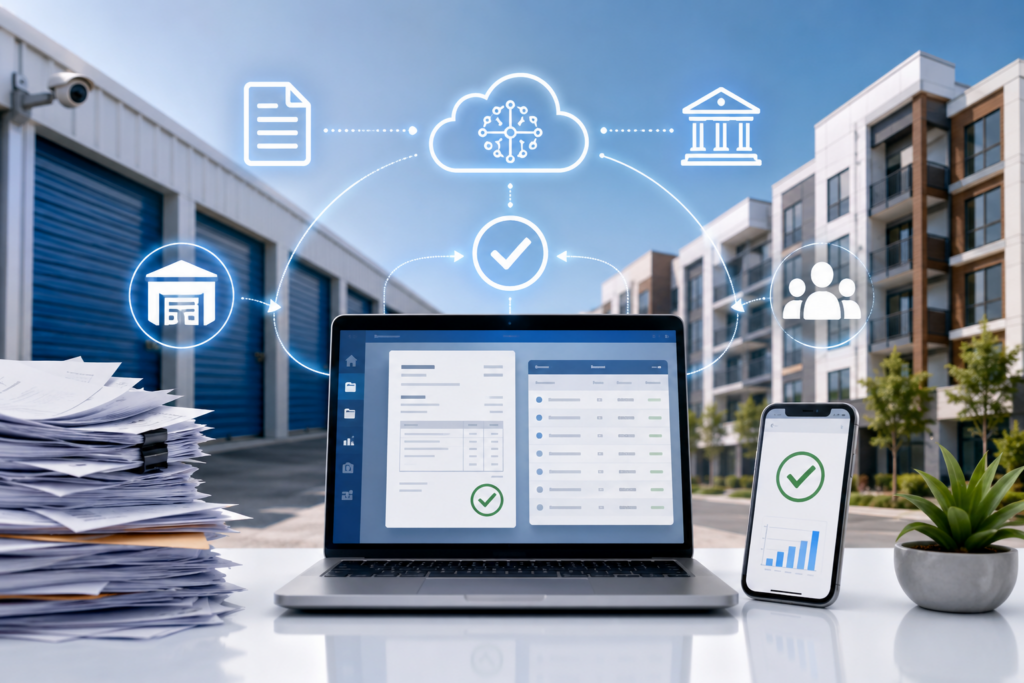
The landscape of modern property management has undergone a radical transformation over the last decade, driven by a collective demand for smarter, faster, and more secure financial operations. For years, residential and commercial property managers have reaped the benefits of automated Accounts Payable (AP) workflows, ridding themselves of the paper-shuffling and manual data entry that once defined the industry. Yet, right alongside traditional real estate, another booming asset class has been quietly grappling with the exact same administrative headaches: the self-storage industry.
Recognizing this critical market gap, SparcPay has officially announced its strategic expansion into the Self-Storage vertical. To spearhead this launch, SparcPay has rolled out a powerful new Dual Entry integration, welcoming Dual Entry as its newest premier software partner.
This collaboration bridges the gap between specialized property operations and cutting-edge financial technology. By combining SparcPay’s seamless digital payment automation with Dual Entry’s AI-native Enterprise Resource Planning (ERP) capabilities, self-storage operators can finally eliminate the operational bottlenecks that hold their businesses back.
Parallel Pain Points: Why Self-Storage Shares Property Management’s AP Burden
At first glance, a multi-family apartment building and a multi-unit self-storage facility might seem like completely different operational beasts. One manages residents, leases, and amenities; the other manages unit locks, security gates, and month-to-month tenant transitions. However, strip away the physical differences of the real estate, look directly at the back office, and the operational DNA is virtually identical.
Both verticals suffer from distinct, highly frustrating payables pain points that drain time, increase overhead, and expose organizations to human error.
1. Multi-Entity Madness and Fragmented Locations
Much like a property management firm overseeing dozens of separate real estate entities, modern self-storage operations are rarely single, standalone businesses. They frequently scale into multi-location portfolios, where each individual facility operates as its own unique legal entity or limited partnership.
For the accounting team, this structural complexity creates a recurring nightmare. Managing invoices across multiple locations means constantly logging in and out of different corporate entities, manually keeping track of separate general ledgers, and struggling to maintain a unified view of overall financial health.
2. High Volumes of Recurring and Varied Invoices
A self-storage facility may not have to worry about broken apartment appliances, but it is hit with a constant barrage of operational expenses. Facility managers must juggle recurring utility bills, specialized security and gate software subscriptions, local marketing expenses, landscaping or snow removal contracts, and routine maintenance fees across dozens of facilities. When these invoices roll in, they are often routed across different channels, some via email, others via physical mail, leading to lost documents and missed payment deadlines.
3. The Approval Bottleneck
In both residential property management and self-storage, the individuals who authorize an expense are rarely the ones sitting in the corporate accounting office. A facility manager on the ground usually needs to verify that a security system repair was completed correctly before the vendor gets paid.
Without an integrated, digital workflow, this process stalls completely. Invoices get stuck on site managers’ desks, or get lost in endless internal email threads, forcing accounting teams to constantly chase down approvals just to complete a standard month-end close.
4. Manual Data Entry and Reconciliation Errors
When AP processes rely on manual workflows, accounting teams are forced to spend hours typing invoice details line-by-line into their accounting software. This repetitive task is not only a poor use of skilled labor, but it also opens the door to costly typos, misclassified general ledger codes, and missed duplicate bills. When it comes time for bank reconciliation, tracking down where a couple of mismatched numbers originated turns into an algorithmic scavenger hunt.
Introducing the SparcPay x Dual Entry Integration
The launch of the SparcPay and Dual Entry integration offers a comprehensive solution to these systemic industry challenges. Dual Entry has quickly earned a stellar reputation as an AI-native ERP designed specifically to handle complex financial operations, multi-entity consolidation, and real-time ledger management without legacy constraints. By embedding SparcPay’s automated invoice capture and digital payment execution directly into the Dual Entry ecosystem, self-storage operators gain access to a true end-to-end AP powerhouse.
Here are the operational highlights that self-storage businesses can expect from this game-changing integration:
Seamless AI-Powered Invoice Capture
Gone are the days of manual data entry. Through the integrated system, invoices are automatically ingested and processed using advanced OCR technology and predictive AI algorithms. The system intelligently reads the invoice data, extracts the vendor details, maps the costs to the appropriate general ledger accounts, and flags potential duplicates before they ever reach the approval stage.
Simplified Multi-Entity Portfolio Management
The SparcPay x Dual Entry integration treats multi-entity portfolios as a standard feature, not a complex exception. Accounting teams can seamlessly manage, review, and process payables across an entire multi-location self-storage portfolio from a single, centralized dashboard. Real-time balance visibility and automated intercompany data syncs ensure that everything remains mathematically sound across all corporate branches.
Frictionless Digital Approval Workflows
Geographic distance is no longer a barrier to swift approvals. When an invoice enters the system, custom, role-based approval paths route the document exactly where it needs to go. Facility managers can securely review and approve invoices from any device, anywhere. Once the operational sign-off is complete, the invoice automatically routes back to the central finance team for final payment authorization.
Complete Payment Automation and Electronic Execution
Once an invoice is approved, SparcPay takes care of the heavy lifting. The platform automates the entire payment execution process, transitioning businesses completely away from manual check printing, signing, stuffing, and mailing. Vendors are paid securely via electronic methods, improving vendor relationships while drastically reducing corporate overhead costs.
Elevating Self-Storage Operations
As the self-storage market continues to institutionalize and scale, operational efficiency is becoming the ultimate competitive differentiator. Operators can no longer afford to waste valuable hours on manual administrative tasks that could easily be handled by intelligent automation.
By expanding into the self-storage vertical with the Dual Entry integration, SparcPay is bringing the same financial clarity, security, and velocity to storage facilities that revolutionized modern property management. It is time for self-storage operators to step out from under the weight of paper invoices, eliminate the risk of manual errors, and embrace a streamlined financial future.
Curious to see how the new SparcPay x Dual Entry integration can transform your self-storage back office? Contact our team today to schedule a customized demo.